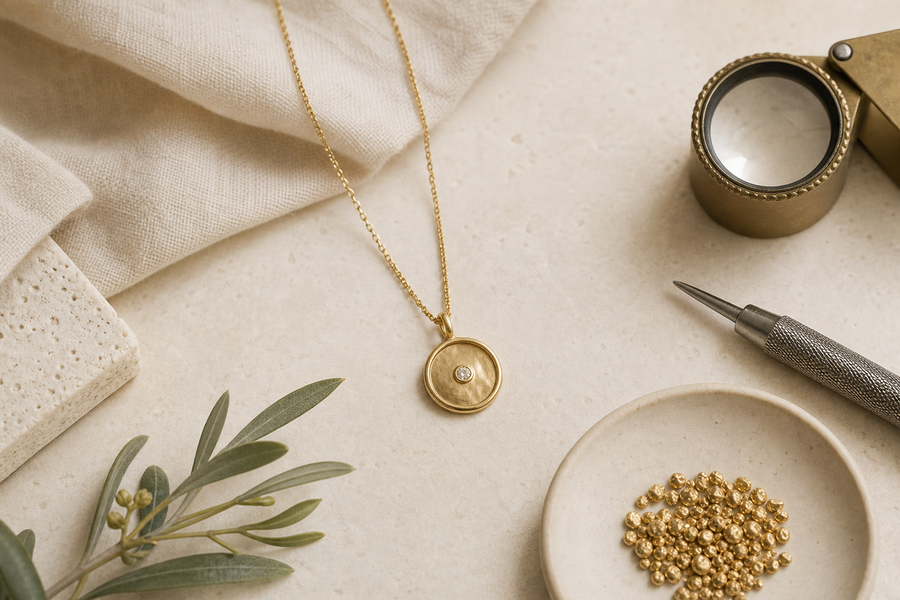
Responsible jewelry is not defined by one material, label, or promise. It involves a series of choices: where materials come from, how a piece is made, how honestly those details are communicated, how long the design can be worn, and what happens when it needs care or repair.
Look for specific, understandable information
Broad words such as “green,” “conscious,” or “ethical” can sound reassuring without explaining very much. Useful information is specific. A brand should be able to describe its metals, stones, production approach, packaging, and relevant standards in language a customer can understand.
Not every supply chain can be explained in a single sentence, and traceability varies by material. Honest limits are preferable to absolute claims that cannot be supported.
Understand the metal
Ask whether a piece is solid gold, gold vermeil, gold filled, or gold plated. These categories differ in composition, durability, price, and care. Also look for the metal fineness, such as 14k or 18k for gold.
Recycled precious metal can reduce demand for newly mined material, but the claim should still be clear about what portion is recycled and whether it applies to the full piece or selected components. Newly mined material may also be sourced through programs designed to improve traceability or working practices. The important point is to understand the claim rather than relying on a single preferred word.
Ask about stones and documentation
Natural, laboratory-grown, and recycled stones each have different considerations. Ask what type of stone is used, what treatments are known, and what documentation accompanies significant gems. For diamonds or other valuable stones, independent grading information may help explain characteristics, though a report is not the same as a complete sourcing history.
A responsible conversation should distinguish clearly between material identity, quality grading, and origin claims.
Value craftsmanship and durability
A piece that is carefully made, suited to its purpose, and maintained for years can offer more lasting value than one treated as disposable. Examine clasps, hinges, chain connections, stone settings, and finishing. Ask whether the design can be resized or repaired and whether replacement components are available.
Durability does not mean every piece should be worn in every situation. Fine chains and delicate stones still require appropriate care. It means the construction is considered, the limitations are explained, and service is possible when normal wear occurs.
Consider the people behind the piece
Jewelry passes through many hands, from material processing to design, setting, polishing, quality control, and packaging. Information about where work takes place, whether specialist skills are valued, and how suppliers are selected can provide useful context.
Be cautious of imagery that romanticizes craft without offering any real information. Responsible practice is demonstrated through policies, relationships, documentation, and continuous improvement—not styling alone.
Packaging and delivery matter, but keep perspective
Right-sized packaging, reusable boxes, recycled paper, and consolidated delivery options can reduce unnecessary material. These are worthwhile choices, though they should not distract from the larger impacts connected with materials, manufacturing, product life, and transport.
Questions to ask before buying
- What exactly is the piece made from?
- What does the brand mean by its sourcing claims?
- Are important stones treated or accompanied by documentation?
- Where is the jewelry made and finished?
- Can the piece be repaired, resized, or refinished?
- What warranty and aftercare are available?
- What care does the design require?
Care is part of responsible ownership
Wear pieces thoughtfully, store them separately, and address loose stones or damaged clasps early. Repairing, resizing, refinishing, gifting, or redesigning jewelry can extend its useful life. Our gold jewelry care guide offers a gentle starting routine.
Choose with curiosity
No purchase is reduced to a perfect checklist. Look for credible detail, realistic language, quality construction, and a design you will genuinely wear. Learn more about Elodor, then explore the collection with questions that reflect your own priorities.