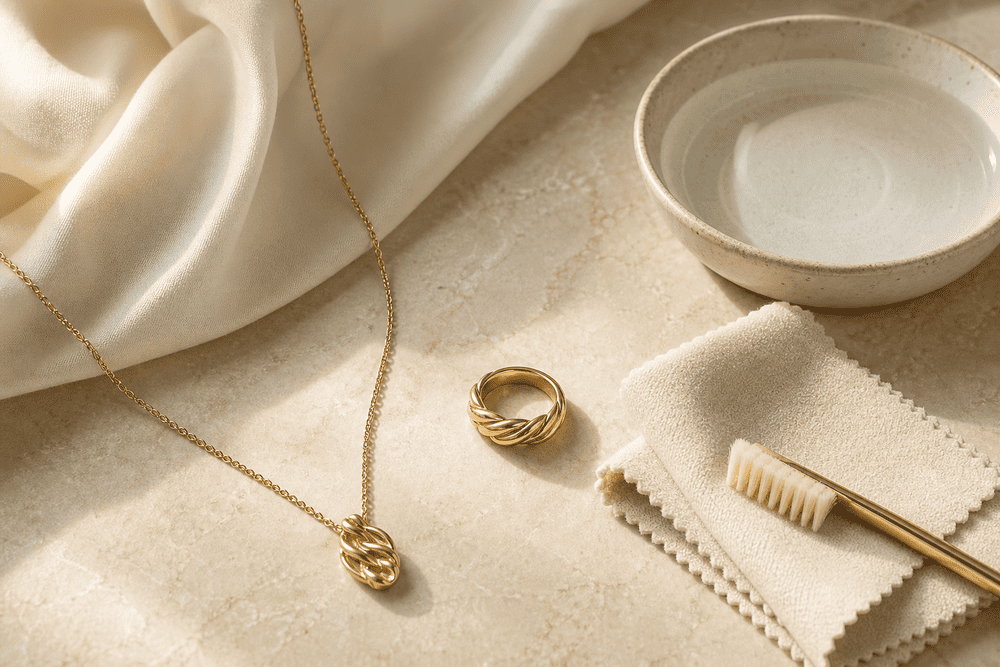
Gold jewelry is designed to be enjoyed, but daily wear can leave behind skin oils, lotion, dust, and residue that soften its shine. Learning how to clean gold jewelry gently helps preserve its finish and allows you to notice loose settings or damage before they become larger problems.
Check the piece before cleaning
Examine clasps, prongs, links, and stones in good light. If a gemstone moves, a chain is stretched, or a setting appears bent, stop and ask a qualified jeweler to inspect it. Cleaning cannot repair structural wear and may worsen an already loose component.
Identify the materials as well. Solid gold, gold vermeil, gold-plated jewelry, pearls, opals, emeralds, and glued components do not all tolerate the same treatment. When you are uncertain, follow the maker’s care instructions.
A gentle method for suitable solid-gold pieces
- Fill a small bowl with lukewarm—not hot—water.
- Add a tiny amount of mild, fragrance-free dish soap.
- Let a suitable piece rest briefly in the solution.
- Use a very soft brush to clean gently around details and the back of settings.
- Rinse carefully in a separate bowl of clean water.
- Pat dry with a soft, lint-free cloth and allow the piece to dry completely before storage.
Use a bowl rather than an open sink, and keep the drain closed. Do not scrub aggressively. Fine chains should be supported rather than pulled, and delicate finishes should receive minimal friction.
What to avoid
- Bleach, chlorine, and harsh household cleaners
- Abrasive powders, toothpaste, and stiff brushes
- Very hot water or sudden temperature changes
- Paper towels that may leave fine scratches
- Unverified chemical dips
- Ultrasonic or steam cleaning unless a professional confirms the piece is suitable
Chlorine can damage gold alloys over time, while abrasive products can scratch polished surfaces and remove plating. Ultrasonic movement may also loosen vulnerable stones or affect treated gems.
Special care for plated and delicate jewelry
Gold-plated and vermeil pieces have a gold layer over another metal. Clean them with a soft, dry or barely damp cloth and avoid repeated soaking or scrubbing. Friction gradually wears plating, so gentle handling matters.
Pearls and other porous or delicate gems need separate care. Do not soak them in a general jewelry-cleaning solution. Wipe them softly after wear and keep perfume, hairspray, and cosmetics away from their surfaces.
Build simple daily habits
Put jewelry on after cosmetics, fragrance, and hair products have dried. Remove pieces before swimming, showering, vigorous exercise, household cleaning, and sleeping when chains may pull or tangle. After wear, wipe each piece with a soft cloth before storing it.
Store gold jewelry separately
Separate compartments or soft pouches reduce scratching and tangling. Fasten necklace clasps and lay chains flat or hang them with space between each piece. Keep jewelry in a dry place away from direct sunlight and large temperature changes. Our guide to layering necklaces includes additional advice for preventing tangles while wearing several chains.
When professional care is best
Choose professional cleaning for valuable pieces, complex settings, deep scratches, damaged clasps, loose stones, or materials you cannot confidently identify. A jeweler can clean the piece appropriately and inspect the structure at the same time.
Thoughtful maintenance keeps your favorite necklaces and rings ready to wear. The safest routine is simple: handle them gently, clean only with methods suited to their materials, and seek expert help when anything looks uncertain.