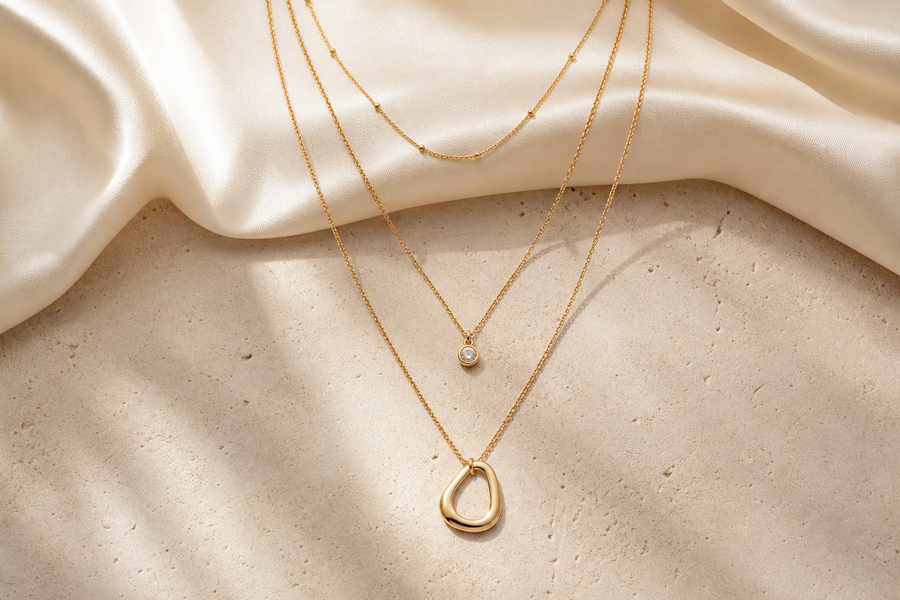
Layered necklaces can make a simple outfit feel intentional, but the most elegant combinations rarely happen by adding pieces at random. The secret is spacing, proportion, and one clear idea. This guide explains how to layer necklaces so each piece remains visible and the final look feels balanced.
Begin with two necklaces
If layering is new to you, start with two chains rather than three or four. Choose a shorter, quieter piece and a longer necklace with a pendant. The difference in length creates separation, while the pendant gives the eye a natural focal point.
Once the pairing feels comfortable, add a third necklace only if it contributes something distinct—perhaps a fine texture, a small point of light, or a bolder lower layer.
Create visible spacing
Necklaces that sit at nearly the same length are more likely to overlap and tangle. Aim for clear intervals between layers. Exact spacing depends on the neckline, pendant size, and the way each chain rests, so treat standard length labels as a starting point rather than a strict rule.
Adjustable chains are especially useful because they allow small changes when you switch from a crew neck to an open collar or V-neck.
Choose one focal point
A strong stack usually has one piece that leads. This may be the longest pendant, a sculptural chain, or a meaningful charm. Let the other necklaces support it instead of competing with equal visual weight.
For example, pair a delicate short chain with a small bezel pendant and finish with a smooth sculptural pendant below. If the longest piece is ornate, keep the upper layers restrained.
Mix texture with intention
Combining different chain textures adds depth even when every piece is the same metal color. A fine cable chain, a subtle beaded chain, and a smooth pendant chain can catch light differently while remaining cohesive.
You can also mix metals. The easiest approach is to repeat each metal at least once elsewhere in your jewelry or include a two-tone connector piece. Repetition makes the contrast appear deliberate.
Consider pendant shape and scale
Several large pendants can crowd one another. If you want multiple charms, vary their scale and silhouette. A tiny round pendant can sit above a longer organic form, while a simple chain provides a quiet layer between them.
Check the side view as well. Heavy pendants can pull lighter chains out of position, and very similar shapes may visually merge.
Match the stack to the neckline
- Open or V-neck: allow the longest pendant to echo the neckline.
- Crew neck: place the stack above the fabric or use longer pieces that sit clearly over it.
- Button-down shirt: keep delicate layers inside the open collar.
- High neckline: choose longer chains with enough contrast to stand out against the fabric.
How to reduce tangling
Use necklaces with different chain weights and lengths. Put the lightest chain at the top and a slightly heavier pendant below. Fasten clasps securely, and check that extension chains are not catching one another. A necklace separator can help when you frequently wear the same combination.
Movement will always shift fine chains to some degree. Briefly resetting the layers during the day is normal. At night, remove each necklace separately, fasten its clasp, and store it flat or hanging with space around it.
Keep the result personal
Rules create balance, but meaning makes a stack memorable. Combine a gift, a travel keepsake, or a pendant associated with a milestone. When the pieces share a personal connection, differences in age or style can feel especially beautiful.
Explore the Elodor necklaces collection for complementary lengths and textures. To keep every layer looking its best, follow our gentle gold jewelry care guide.