An engagement ring is both a piece of jewelry and a daily symbol. The best choice is not simply the most dramatic design; it is the ring that suits the wearer’s style, routine, preferences, and story. If you are wondering how to choose an engagement ring, begin with the person who will wear it and let every design decision follow from there.
Start with personal style
Notice the jewelry the wearer already reaches for. Clean lines, smooth surfaces, and restrained details often point toward a solitaire or bezel setting. A love of vintage forms may suggest a halo, milgrain, or softly ornamental profile. Someone who mixes several pieces may prefer a versatile ring that pairs easily with other bands.
Also consider metal color. Yellow gold feels warm and classic, white metals create a cool contemporary effect, and rose gold has a gentle blush. There is no universal “correct” choice—the most timeless option is the one that feels natural on the wearer.
Understand the main engagement-ring settings
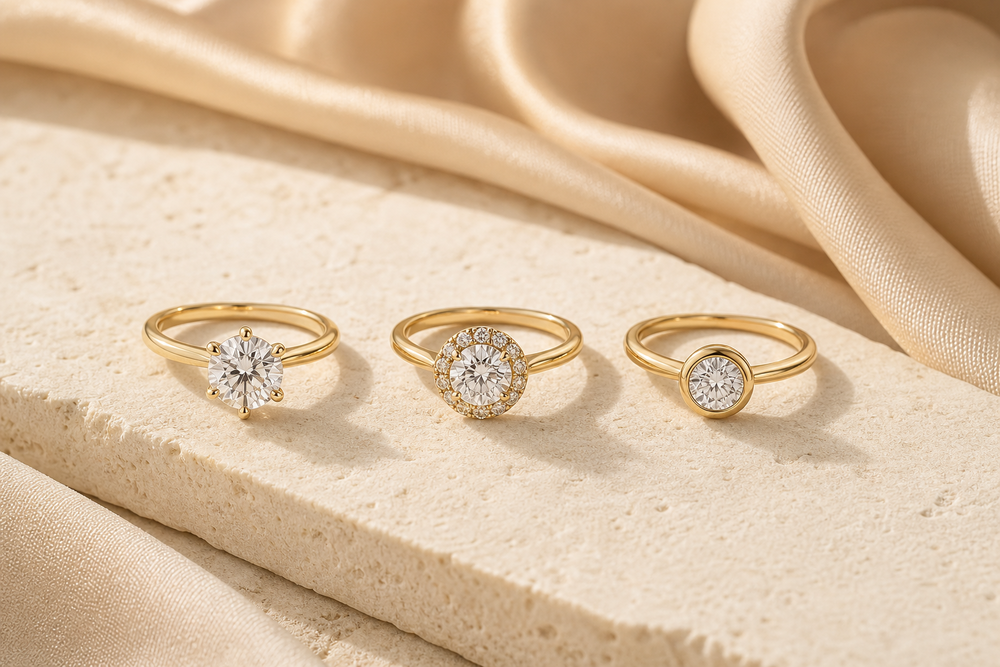
Solitaire
A solitaire places one center stone at the heart of the design. It is elegant, easy to understand, and adaptable to many stone shapes. The height and style of the setting can make it feel either delicate or architectural.
Halo
A halo surrounds the center stone with smaller stones. It adds brilliance and visual presence, though its additional details may require more attentive cleaning.
Bezel
A bezel wraps a slim rim of metal around the stone. Its smooth outline offers a modern look and can be practical for active routines because there are fewer raised edges to catch on clothing.
Three-stone and side-stone designs
These settings add symbolism and light across the finger. They can be beautifully expressive, but their width should be considered alongside comfort and a future wedding band.
Choose a stone by beauty, not a single number
For diamonds, the familiar four considerations are cut, color, clarity, and carat weight. Cut has a strong influence on how lively a stone appears. Color and clarity are graded on scales, but the right balance depends on what is visible to the eye, the chosen setting, and personal preference. Carat describes weight rather than face-up size, so two stones of the same weight can look different.
Shape also changes the character of a ring. Round stones feel classic; oval and pear shapes can create an elongated impression; emerald cuts emphasize clean geometry; and cushion cuts offer softer corners. Colored gemstones can add personality, but ask about durability and appropriate everyday care before choosing one for constant wear.
Match the ring to everyday life
A ring should work beyond the proposal. Consider how often the wearer uses their hands, whether gloves are part of their work, and whether they prefer jewelry that sits close to the finger. A lower-profile or bezel setting may suit an active routine, while a higher setting can allow a wedding band to sit more closely beside the engagement ring.
Fine details matter. Run a finger lightly around the setting to check for sharp edges. Look at the ring from the side, not only from above. Ask how the stone is secured and whether the design can be resized.
Confirm the ring size carefully
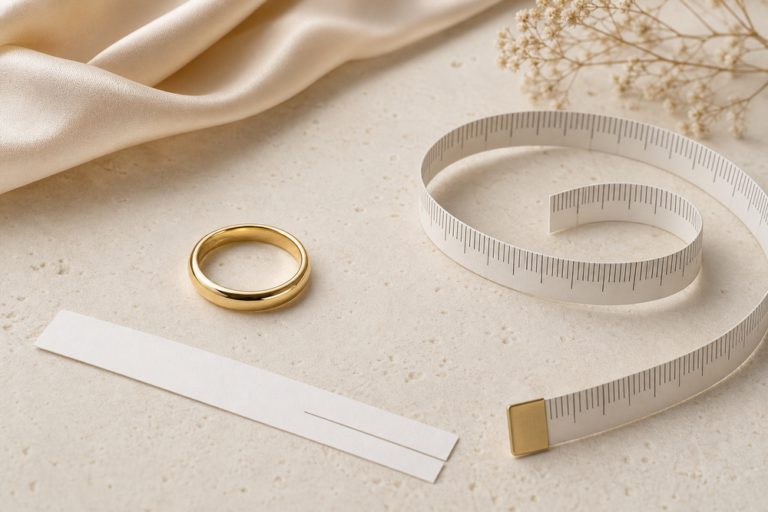
A professional measurement is the best option when available. Finger size can change with temperature, time of day, travel, and swelling, so one quick measurement is not always enough. Wider bands may feel tighter than slender ones. If the proposal is a surprise, borrow a ring worn on the correct finger or ask someone trusted for discreet help. Our guide to measuring ring size at home explains the safest starting points.
Set a complete budget
Choose a comfortable budget based on your own priorities, not a formula. Include the setting, center stone, taxes, possible resizing, insurance, and future maintenance. A balanced design with excellent proportions can feel more beautiful than a larger stone chosen at the expense of craftsmanship.
Ask questions before purchasing
- What metal and fineness is used?
- How is the center stone secured?
- Can the ring be resized, and are there limits?
- What documentation accompanies the stone?
- What are the return, warranty, and service policies?
- What care or inspection schedule is recommended?
Choose the ring that feels true
The right engagement ring balances beauty with comfort, meaning with practicality, and today’s excitement with years of wear. Take time to compare designs in the rings collection, look at every angle, and choose the piece that feels unmistakably connected to the person and promise it represents.